

Pokie Pop casino Plinko
Introduction
When I look at casino content that gets attention in Australia, Plinko keeps standing out for a simple reason: it looks easy, but it does not play in a simple way. On the Pokie pop casino Plinko page, the format is immediately familiar even to people who rarely touch classic pokies. A ball drops from the top of the board, hits a field of pins, changes direction again and again, and finally lands in a multiplier slot at the bottom. That is the whole visual idea. Yet the actual player experience can shift sharply depending on stake size, board setup, and especially the selected risk level.
That contrast is exactly why Plinko deserves a proper breakdown. It is not a slot in the usual sense, not a table game, and not a live casino product built around social pressure or dealer interaction. It sits in a different category: fast, visual, highly repeatable, and driven by short outcome cycles. On Pokie pop casino, Plinko is the kind of game that can feel relaxed for a few rounds and then suddenly tense when a player starts chasing a high multiplier path.
In this review, I will stay focused on what matters most to a real player: how Plinko works, what the rhythm of a session feels like, where the uncertainty comes from, what the risk settings actually change, and whether this format is worth trying at all. The goal is not to oversell it. The goal is to explain what Plinko really offers on a practical level.
What Plinko is and why it attracts so much attention
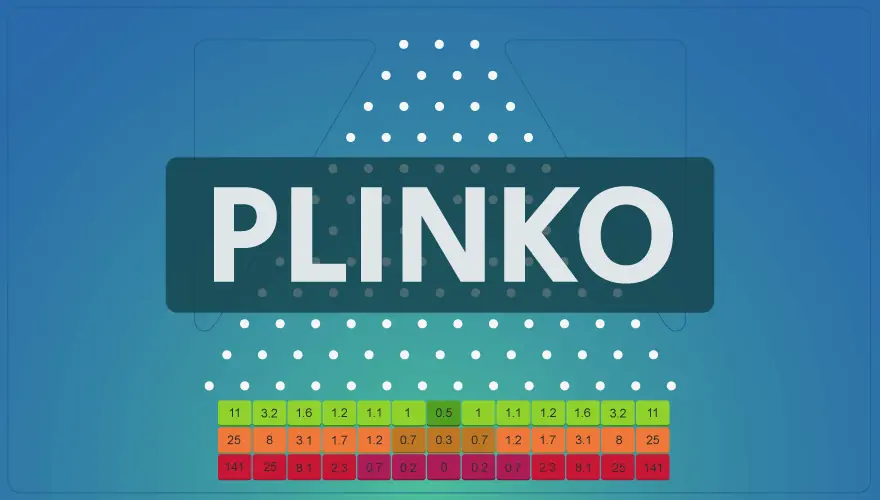
Plinko is a chance-based casino game built around a vertical board filled with pegs. The player chooses a bet, often selects a risk mode and sometimes the number of rows, then releases a ball from the top. As the ball bounces left and right off the pegs, it moves toward one of several payout zones at the bottom. Each zone carries its own multiplier. Most rounds end in modest returns or low-value outcomes, while the highest multipliers sit at the far edges and are hit much less often.
Its appeal starts with visibility. In many casino games, the math is hidden behind spinning reels, card distributions, or abstract high value casino bonuses at Pokie Pop Casino systems. In Plinko, the path is visible from start to finish. That creates a very direct connection between action and result. Even though the outcome is still random, the player sees every bounce and feels the suspense build in real time.
There is another reason Plinko became so noticeable. It compresses anticipation into a few seconds. A slot session may involve waiting for scatters, feature triggers, or dead spins between meaningful events. Plinko removes a lot of that downtime. Every drop resolves quickly, and every result is easy to read. For many players, especially those who prefer short rounds and clear feedback, that alone makes the format more engaging than a standard reel-based experience.
One observation I keep coming back to is this: Plinko looks almost toy-like on first contact, but it often creates more emotional swing per second than many full-size video slots. That mismatch between simple presentation and sharp tension is one of the main reasons it keeps players curious.
How the Plinko mechanic actually works
At a surface level, the mechanic is straightforward. You set the wager, choose the game parameters available on the page, and drop the ball. But from a player’s point of view, the important part is not the drop itself. It is how the board structure shapes the distribution of outcomes.
In most Plinko versions, the central slots at the bottom are easier to reach because the ball naturally has more possible paths toward the middle. The edge slots, where the bigger multipliers usually sit, require a more unusual chain of directional changes. That is why the largest rewards are rare. The board is not just decorative; it is the visual expression of a probability curve.
On Pokie pop casino Plinko, the practical logic usually comes down to three variables:
- Bet size — this sets the value of the final multiplier.
- Risk level — this changes how the payout distribution is weighted.
- Board depth or row count — where available, this can alter the path complexity and the spread of possible outcomes.
Risk level is where many players misunderstand the game. A higher-risk setting does not mean the ball becomes “luckier.” It usually means the payout table becomes more extreme: lower returns become more common, while the top-end multipliers become larger but significantly harder to hit. In low-risk mode, the distribution is flatter and more forgiving. In high-risk mode, the session often becomes more volatile, with longer stretches of underwhelming results interrupted by occasional spikes.
The movement itself can create an illusion of pattern. A ball may bounce repeatedly to one side, then reverse sharply, and players often start reading intent into those sequences. In reality, Plinko is built to produce random outcomes within the game’s underlying model. The path is exciting to watch, but it should not be mistaken for a trend signal.
| Core element | What it changes | What it means in practice |
|---|---|---|
| Bet amount | Scales all returns | Higher stakes increase both possible rewards and the cost of losing streaks |
| Risk mode | Reshapes payout distribution | Low risk gives steadier outcomes; high risk creates sharper swings |
| Rows / board size | Affects path spread and multiplier structure | More rows can make the session feel less predictable and more stretched |
| Drop speed / auto play | Changes session tempo | Fast repetition can make bankroll movement feel quicker than expected |
Why the game feels engaging and how the session tempo develops
Plinko works because it combines instant clarity with delayed certainty. You know the possible multipliers before the ball lands, but you do not know which route the ball will take. That creates a very compact suspense cycle. There is no long setup, no need to learn payline structures, and no need to wait for a bonus round to feel that something important might happen.
In practical terms, the pace is one of the defining features of the game. A Plinko session can move very quickly, especially when a player uses repeated drops or auto mode. This sounds convenient, but it changes bankroll perception. In a slot, long animations and feature sequences can slow spending. In Plinko, the speed of resolution can make a session feel lighter than it really is. A player may place dozens of rounds in a short window without the same sense of time passing.
This is where the game becomes more interesting than its interface suggests. The board is simple, the controls are simple, but the emotional rhythm is not always simple. A run of middle results can make the session feel stable. Then a series of low multipliers or misses on high-risk settings can suddenly turn the mood. Plinko often alternates between calm repetition and sharp expectation without changing its visual style at all.
A second observation worth remembering: the game does not need a bonus round to create tension. The tension is built into the drop itself. That is unusual in casino design, and it explains why some players stay engaged even without narrative features, symbols, or expanding side mechanics. Anyone stuck on account verification can follow the steps laid out in Pokie Pop Casino poker help.
How risky Plinko is and who usually enjoys it most
Plinko can be relatively mild or quite aggressive depending on how it is configured. That is why broad statements about the game can be misleading. Saying that Plinko is “safe” or “high risk” without context does not help the player. The real answer depends on the selected mode and on how the player approaches stake sizing.
Low-risk Plinko tends to suit players who want frequent resolution and a smoother balance curve. It still involves chance, but it often produces more moderate outcomes and fewer dramatic swings. High-risk Plinko is a different experience. It is better understood as a chase format, where many rounds may deliver little while a small number of edge hits carry disproportionate value. If bonuses are what you care about, Pokie Pop Casino Sweet Bonanza slot tips breaks down every offer currently running.
In my view, the game is best suited to players who:
- prefer short rounds over long feature cycles;
- like transparent visual outcomes;
- understand that high multipliers are rare and not something to expect on demand;
- can manage staking discipline in a fast session.
It may be less suitable for players who mainly enjoy traditional pokie structure, where entertainment comes from symbols, themes, sound design, free spins, and layered bonus features. Plinko strips most of that away. If a player needs variety within each round, the format may feel too bare after the first novelty wears off.
What players should understand about probabilities and possible outcomes
The most important thing to understand before launching Pokie pop casino Plinko is that visible motion does not equal controllable probability. The board gives the impression that each bounce is a meaningful event you can read. But for the player, the key fact is simpler: outcomes are distributed according to the game’s math, not according to perceived streak logic.
That matters because Plinko can tempt players into pattern-seeking. If several balls land near the centre, some will assume the edges are “due.” If a high multiplier hits once, others may think another big result is close. This is not a useful way to approach the game. Each drop should be treated as its own event within the payout framework.
On a practical level, there are three points I always consider essential:
- Most rounds are not meant to produce standout returns. The game often relies on many ordinary outcomes and a few notable ones.
- Higher risk settings widen the gap between common and exceptional results. This can make sessions feel exciting, but also harsher.
- Fast repetition magnifies variance. Even if each round is brief, the cumulative effect over 50 or 100 drops can be substantial.
For Australian players used to reel-based pokies, this can be an adjustment. In slots, variance is often wrapped inside feature triggers and symbol combinations. In Plinko, the distribution is more exposed. You can feel the imbalance between common outcomes and premium multipliers much more directly.
| Session style | Likely experience | Main caution |
|---|---|---|
| Low risk, small stakes | Steadier flow, less dramatic movement | Can feel repetitive if you expect big moments often |
| Medium risk, controlled stakes | Balanced mix of routine and suspense | Still capable of short losing runs |
| High risk, aggressive stakes | Sharp swings and stronger anticipation | Balance can drop quickly before any major hit appears |
How Plinko differs from classic slots and other casino games
The easiest comparison is with online slots, because that is where many players will come from. But the differences are bigger than they first appear. A slot is usually built around symbol combinations, reels, bonus rounds, and layered presentation. Plinko removes almost all of that. There are no paylines to interpret, no scatter chase in the usual sense, and no feature round doing the emotional heavy lifting.
Compared with classic pokies, Plinko offers:
- faster round resolution;
- a physical ball-drop element that removes the need for spinning reels and paylines.
- less thematic depth;
- more direct exposure to variance through multiplier distribution.
Compared with roulette, Plinko shares a simple bet-to-result structure, but the viewing experience is more animated and path-driven. Compared with crash Pokie Pop Casino games and account details, it offers suspense without requiring the player to decide when to cash out. Compared with table games, it demands less rules knowledge and less tactical attention.
That difference matters because Plinko is not trying to replace every other casino format. It serves a specific mood. It is for players who want something quicker than slots, more visual than a static number game, and less cognitively demanding than blackjack or poker-style decisions.
A third memorable observation: Plinko is one of the few casino formats where the journey to the result often feels more important than the result itself. In many games, the reveal is everything. Here, the bounce sequence becomes part of the entertainment value.
Real strengths and practical limitations of the format
Plinko has genuine strengths, but they only matter if they match the player’s style. The first strength is accessibility. You can understand the core loop almost instantly. The second is tempo. The third is visual transparency. Those three elements make the game easy to enter and easy to repeat.
There is also a strategic advantage in simplicity. Because the format is stripped down, it is easier to notice how risk settings affect the session. In a complex slot, volatility can be felt but not always clearly seen. In Plinko, the relationship between mode selection and outcome distribution is usually more obvious.
Still, the limitations are just as real. The simplicity that makes the game approachable can also make it feel thin over longer sessions. Players who enjoy evolving bonus structures may find that Plinko reaches its full range quickly. Once you understand the drop logic, the rest of the experience depends mainly on your tolerance for repetition and outcome swings.
Another practical limitation is emotional compression. Because rounds are short and visually similar, players can slip into rapid-fire betting without much reflection between drops. That is not a flaw in the software by itself, but it is a real behavioural issue to keep in mind.
What to check before starting a Plinko session on Pokie pop casino
Before opening a real-money session, I would focus on a few concrete checks rather than treating Plinko as a casual click-and-go option. The game is easy to start, but that is exactly why players should set boundaries first.
- Look at the risk setting before you look at the top multiplier. The headline number is attractive, but the distribution behind it matters more.
- Use a stake size that fits repeated rounds. In Plinko, the issue is rarely one dramatic bet. It is the cumulative effect of many fast drops.
- Test the pace mentally. If the interface supports auto play or quick repetition, decide in advance how long the session should be.
- Separate entertainment from expectation. A visible near-edge bounce can feel like you almost hit something “deserved,” but near misses do not carry future value.
If Pokiepop casino offers a demo version of Plinko, that can be useful not because demo play predicts real outcomes, but because it helps a player understand rhythm. The most important lesson in a trial session is often not the payout table. It is whether the pace and repetition actually suit your style.
Final verdict on Pokie pop casino Plinko
Pokie pop casino Plinko offers a very specific kind of casino experience: fast, visual, stripped back, and driven by short bursts of suspense. Its biggest strength is clarity. You do not need to decode paylines or wait for a bonus trigger to understand what is happening. The entire appeal is concentrated in the drop, the bounce path, and the multiplier at the bottom.
That said, the simplicity of the interface should not be confused with a simple risk profile. Plinko can feel light and approachable, but the session character changes sharply with the chosen risk mode. Low-risk play may suit someone who wants a smoother flow. High-risk play can create the opposite effect: longer stretches of weak returns with the occasional high-impact result. That difference is crucial, and players should understand it before staking seriously.
I would recommend Plinko to players who value speed, direct feedback, and visible randomness. I would be more cautious with it for players who prefer rich slot features, slower pacing, or a stronger sense of progression within each round. In other words, Plinko is not universally appealing, but it is very effective at what it does.
My overall view is clear: Plinko is worth trying if you want a casino format that turns a simple drop into a concentrated suspense cycle. Its strengths are immediacy, readability, and flexible risk settings. Its weak points are repetition, fast bankroll turnover, and the temptation to misread randomness as momentum. For the right player, that mix can be genuinely engaging. For the wrong one, it can feel too bare or too abrupt. Knowing which side you are on is the most useful decision you can make before pressing drop.
FAQ
How does Plinko work when a ball drops?
Plinko uses a grid of pegs where the ball bounces unpredictably before landing in a multiplier zone. Each landing determines the multiplier for the round and credits are calculated from the selected bet. The round ends once the ball reaches the bottom scoring area.
What affects the multiplier results in Pokie Pop Plinko?
The multiplier outcome depends on the ball path through the pegs and the final landing zone. The selected bet size affects how much the multiplier is worth in your account balance. The game settings for that round are applied before the ball is released.
Is Plinko offered in demo mode or only for real-money play?
Plinko can be played in demo mode so the ball-bounce mechanics feel familiar without risking funds. For real-money play, the game uses the balance in the casino account after login. Switching modes changes whether credits are based on simulated or actual wagering.
What risk level should be expected from a Plinko round?
Plinko is based on multiplier outcomes that can swing between low and high results, so volatility is part of the game’s nature. The selected bet determines how strongly these swings impact the account. A responsible approach is to keep betting within an agreed casino session budget.
How can a mobile player launch Pokie Pop Plinko on the official site or mobile casino app?
Plinko works in the mobile casino experience through the browser version of the official site, and the mobile casino app can also be used depending on availability. Open the menu or games area, then select Plinko and start a round. If buttons appear differently, updating the app or refreshing the browser page usually restores the controls.
If a withdrawal is pending, does it affect access to Plinko real-money play?
A pending withdrawal can affect the available cash for new wagering, depending on how the cashier status is handled in the account. The safest step is to check the current available balance in the account before starting a real-money Plinko session. If any restriction is shown, wait for the withdrawal to finish or contact support.
How are free spins and other promo features handled on a Plinko session?
If a promo feature applies to Plinko, the game interface will reflect the active promotion for the round type involved. Promo conditions such as wagering requirements or eligible game states are shown in the offer details in the promo area of the account. If a promo is not active, Plinko uses standard real-money play with normal bet and multiplier scoring.